
Blog
How to Make a 2026 Vision Board That Works (Science-Backed)

Introduction
Let’s be honest. By February, that gorgeous vision board you made on New Year’s Day? It’s probably buried under a stack of mail, and your life looks pretty much the same as it did in December.
We’ve seen it happen over and over again — and it’s exactly why we wrote our vision board books. After three bestselling titles on Amazon and thousands of readers who’ve used our method, we know what separates a board that works from one that just looks pretty on a shelf.
Spoiler: it’s not the aesthetic. It’s the feeling.
At Perks Media, we’ve built our entire approach around one core truth — when you feel it, your body takes the actions. That’s not woo-woo. That’s brain science. And once you understand it, vision boarding stops feeling like a craft project and starts feeling like one of the most powerful tools in your life design toolkit.
So let’s get into it.
Key Takeaways
- Vision boards tap into real brain patterns — specifically the Reticular Activating System (RAS), which trains your mind to spot opportunities that match your images.
- The strongest boards are built in phases — Dream, Collect, Refine, and Assemble. Structure keeps the process clear and the results real.
- The feeling is the fuel. When your board makes you feel something true and alive in your body, your nervous system gets on board — and your actions follow.
- Daily rituals beat a single craft day. Two minutes every morning is more powerful than one beautiful Sunday session.
- Vague boards get vague results. Specific, emotionally resonant images tied to tiny real actions — that’s the Perks Media method.
The Science Behind Why Vision Boards Actually Work
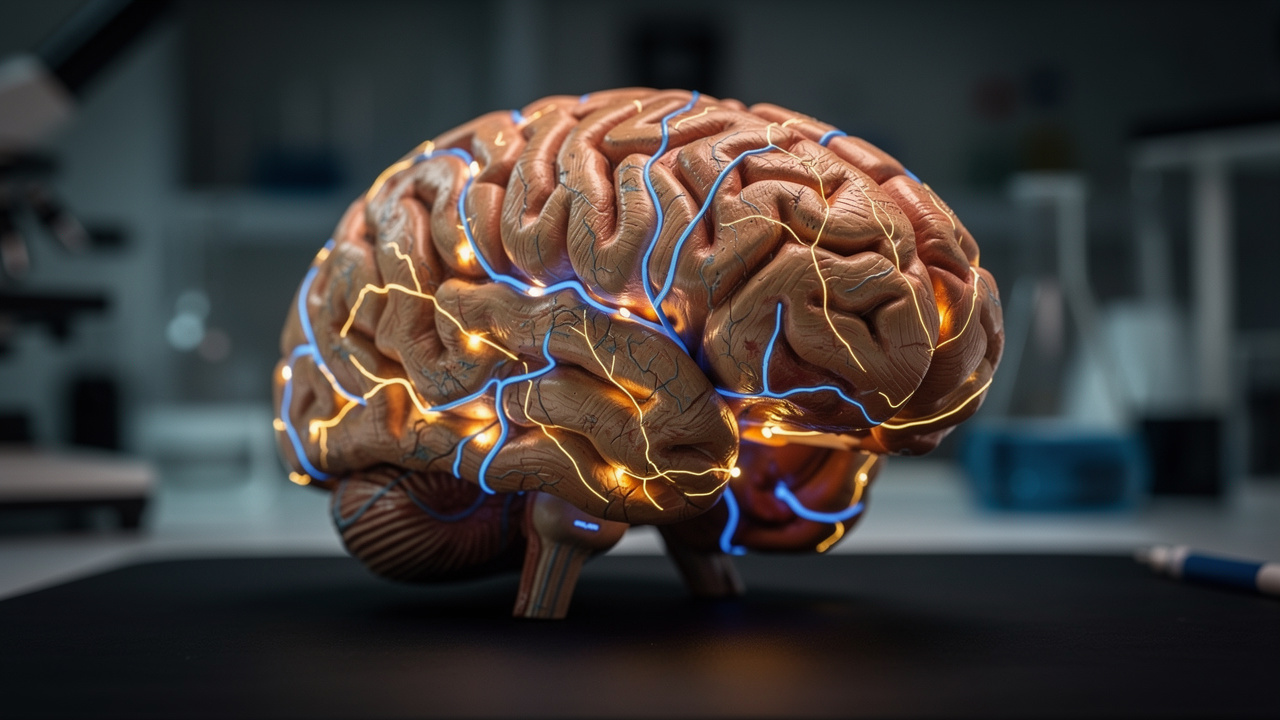
Here’s what we always tell our readers: vision boards are a little bit magic — and there’s real science to back that up. One of our most beloved titles is literally called The Magic Vision Board Book for Women, because we believe you should bring magic into your life. The wonder, the possibility, the feeling that something extraordinary is available to you — that’s not fluff. That’s the spark that gets everything moving. And as it turns out, science agrees.
The RAS: Your Brain’s Built-In Filter
Your brain receives millions of pieces of information every second. It can’t process all of it — so it uses a system called the Reticular Activating System (RAS) to filter what gets your attention. Think of it like a search algorithm running in the background of your mind 24/7.
When you look at your vision board every single day, you’re essentially programming that algorithm. You’re telling your brain: this matters, look for this. And it does. Suddenly you notice the article, the conversation, the open door that was always there — you just weren’t tuned in to it before.
This is one of the core reasons our vision board books are designed the way they are. Every prompt, every layout choice, every guided section is built to help you train that filter with intention.
The Feel-Good Factor (This Is the Big One)
Here’s what most vision board guides miss entirely: your body has to believe it before your brain will act on it.
This is the piece we’re most passionate about at Perks Media. When you look at your board and feel a genuine spark — calm, excitement, pride, warmth — your nervous system registers that as real. It starts to associate those feelings with possibility rather than fantasy. And when something feels possible? Your body starts moving toward it. Naturally. Without forcing.
That’s why we don’t just ask “what do you want?” in our books. We ask “how do you want to feel?” Because the feeling is the bridge between the image and the action.
Visualization Builds Real Neural Pathways
Elite athletes have known this for decades. Mental rehearsal — vividly imagining yourself inside a scene — activates many of the same neural circuits as actually doing the thing. Brain scans confirm it. When you stand in front of your board and picture yourself living those images, you’re giving your brain practice runs. The more you do it, the more natural the real action feels when the moment arrives.
Self-Discrepancy Theory: The Gap That Motivates (Or Paralyzes)
Psychology tells us the brain is constantly comparing who we are now with who we want to become. When that gap feels small and believable, we feel pulled forward. When it feels enormous and fake, we shut down.
This is why our vision board books are so intentional about helping readers find their next version — not a fantasy life that belongs to someone else. Stretch, yes. But stay in the zone of I can actually see myself there.
“You do not rise to the level of your goals. You fall to the level of your systems.” — James Clear
A vision board clarifies your goals. Your daily rituals and micro-actions carry them into real life. That’s the full picture — and it’s exactly what our books are built around.
How To Build Your 2026 Vision Board Step By Step
Phase 1: Dream — Get Clear On What You Actually Want

Before cutting out a single picture, start with reflection. A helpful tool here is the Wheel of Life, which breaks life into areas such as career, health, relationships, money, personal growth, fun, and home. Rating each area on a simple scale shows where life already feels steady and where change would feel most meaningful in 2026.
From there, journal with feeling-focused prompts, for example:
-
“How do I want to feel in my body in 2026?”
-
“What would a satisfying workday look like?”
These questions open up more than rigid goals. Instead of only writing “run three miles” or “earn more,” we write phrases like “steady energy in the morning,” “proud of my strength,” or “calm about my bills.” Then we pick two or three areas to focus on for the year. That micro-action style, where a steady change in a few key zones beats trying to overhaul everything at once.
Phase 2: Collect & Refine — Curate With Intention
Now you gather your visuals. Our Perks Media vision board books are a great starting point here — they’re designed to give you a curated, intentional foundation to build from. But don’t stop there. Layer in images from magazines, printed photos, Pinterest, Canva, or wherever your eye lands and your heart says yes. The mix of our guided prompts and your own personal imagery is where the real magic happens.
At this stage, don’t overthink it. Pull anything that gives you a strong yes in your body, even if you can’t explain why. A snapshot of a hike with friends, a simple bowl of soup, the look on your own face during a proud moment — these carry far more power than a polished stock image. Personal and specific always beats pretty and generic.
Then refine. Lay everything out and ask:
-
Does this feel like the next believable version of me, or someone else’s life?
-
Does it stir a real emotion — calm, joy, strength, connection?
-
Does this match what matters most for 2026?
Anything flat, too distant, or just “pretty” goes back in the pile. Keep words and affirmations in the present tense — “I feel strong and supported” — because the brain responds to statements that sound like they’re already true.
Phase 3: Assemble — Build Your Board
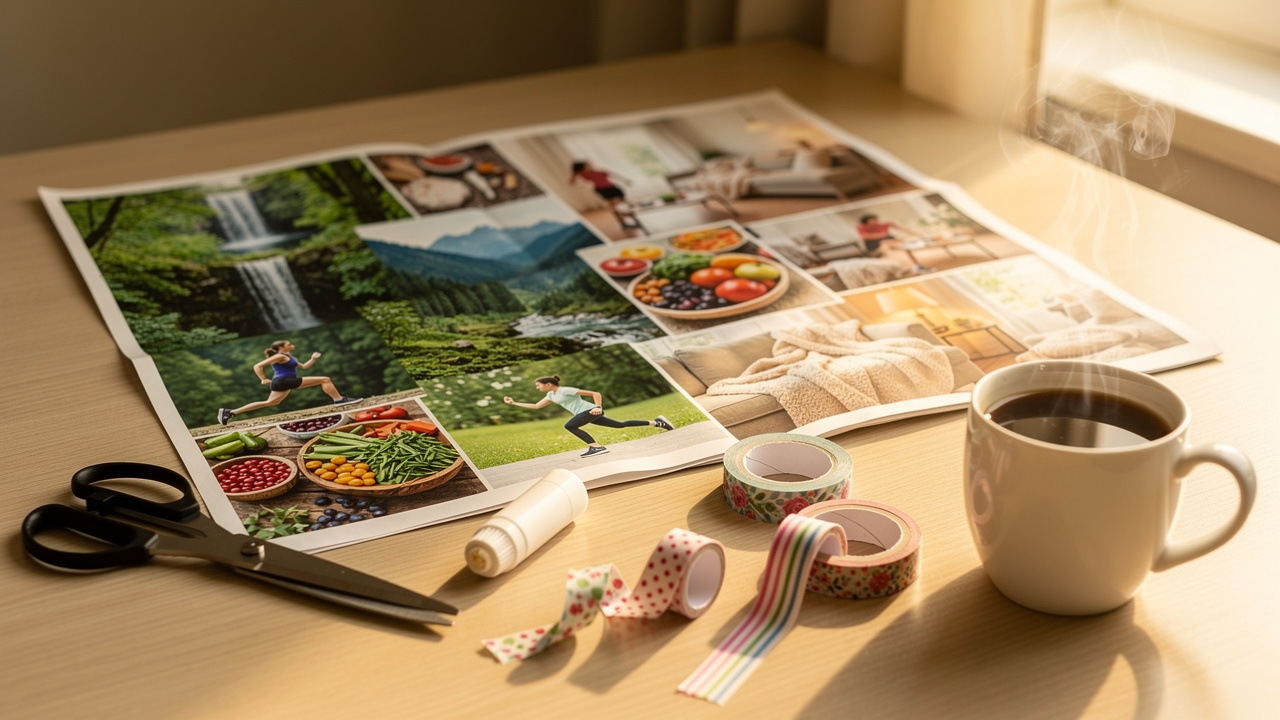
With a smaller, more powerful set of images and words, we are ready to build the board itself. Some people love a physical vision board using a poster, cork board, or large notebook page. The act of cutting, trimming, and arranging can become a calm craft time that links the hands with the heart. Others prefer a digital vision board made in Canva or on a private Pinterest board, which can then be saved as a phone or laptop background for constant visibility.
There is no single right layout. We can:
-
Group sections by life area, such as health in one corner and work in another, or
-
Blend everything into a flowing collage.
We like to leave a bit of white space so the eye can rest and each image has room to stand out. If feeling stuck, Perks Media’s life design prompts and goal guides can help choose which themes go front and center. When the board feels complete, we take a moment to look at it and think, “This is me in 2026.” It should feel like an honest blueprint of the person we are becoming, not a fantasy cut from a magazine.
How To Activate Your Board With Daily Rituals
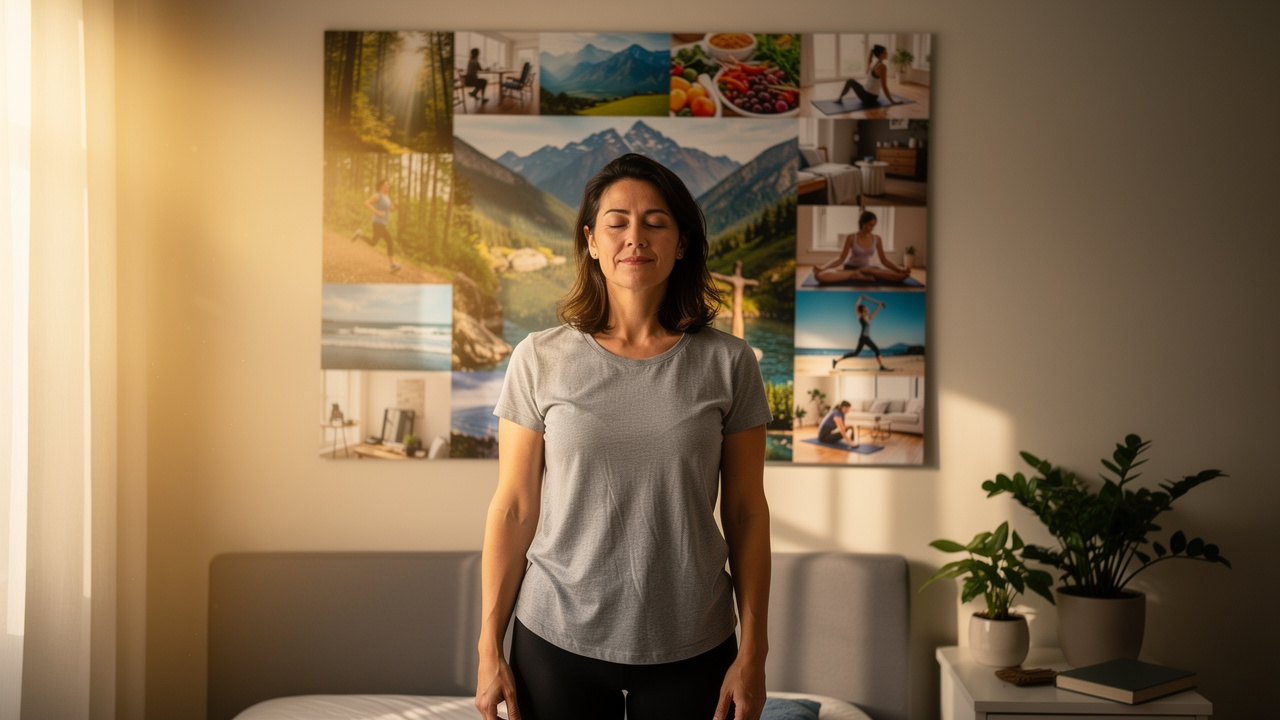
A beautiful board has almost no power if it lives behind a closet door. The magic is in the daily contact.
Step 1: Put it somewhere you’ll actually see it. Beside the bed, near the bathroom mirror, behind your laptop. For digital boards, make it your lock screen.
Step 2: Build a two-minute morning ritual. Stand or sit in front of your board. Take a slow breath. Choose one image. Then step into it — notice the sounds, the smells, the textures, and most importantly, how your body feels inside that scene. This is the mental rehearsal that builds neural pathways and makes future action feel familiar.
Step 3: Act as if — in tiny, real ways. If your board shows you feeling strong and energized, the action might be a five-minute movement video, not a full gym overhaul. If it shows a calm evening with your laptop closed by 8pm, the action might be setting one simple alarm.
This is the Perks Media micro-action approach in action. Small steps, repeated consistently, line up your board, your brain, and your daily life. Over weeks and months, that alignment creates real, visible change.
Common Vision Board Mistakes (And How To Avoid Them)
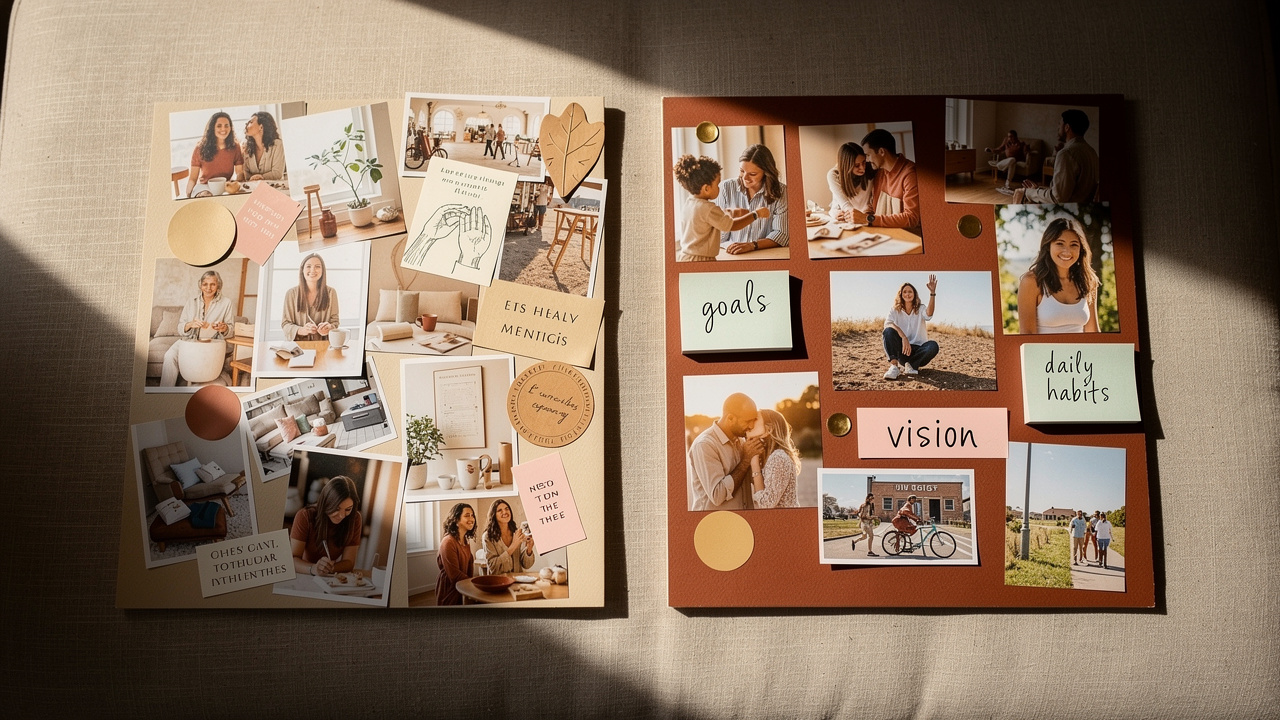
Using images that look good but feel nothing. Pretty isn’t enough. Every image needs to connect to a real emotion or memory. If it doesn’t stir something in your body, it won’t stir your brain into action.
Putting a movie-star life on your board. When the vision feels like it belongs to someone else, your brain checks out. Aim for a future that stretches you — but one you can genuinely feel yourself stepping into.
Being too vague. The RAS needs clear targets. Specific scenes, places, numbers, and feelings give it something to work with.
Hiding the board after craft day. Out of sight, out of mind — literally. Keep it visible. Daily contact is everything.
Expecting the board to do the work. The images give you the why. Your habits do the work. Link each section of your board to one small, repeatable daily action.
Tip: When you feel stuck, choose one square inch of your board and ask, “What is the smallest step I could take today that matches this picture?”
Why Our Vision Board Books Are Different
We’ve written three vision board books that have sold well on Amazon — and the reason readers come back (and send us messages about their results) is because we don’t just give you a pretty template.
Every book is built on the same foundation you’ve read here: the science of the RAS, the power of emotional resonance, and the Perks Media micro-action method. We guide you through the Dream, Collect, Refine, and Assemble phases with prompts that go deeper than “what do you want?” We help you find the feeling first — because when your body feels it, your actions follow.
Our books are designed to be used, not just admired. They’re structured so that the board you create isn’t just beautiful — it’s wired to work.
One of our most popular titles, The Magic Vision Board, was born from the belief that life should feel a little enchanted — and that when you combine that sense of wonder with the right tools and daily rituals, extraordinary things happen. Because they do.
📚 Get Your Copy — Shop Our Vision Board Books on Amazon
Ready to build a board that actually works? Our books walk you through every step — the dreaming, the curating, the daily rituals, and the magic.
👉 Shop Perks Media Vision Board Books on Amazon
Conclusion
A 2026 vision board that works isn’t just a collage. It’s a science-backed, emotionally alive picture of the next version of you — paired with tiny daily actions that make it real.
Start with the feeling. Build from there. Show up for two minutes every morning. And if you want a guided, structured way to do all of this, our vision board books are exactly that — a companion for the whole journey.
Because when you feel it? Your body takes the actions. Every time.
FAQs
Question 1 – When Is the Best Time To Make a 2026 Vision Board?
There is no single perfect date. Many people enjoy making or updating a board between late December and early January, when reflection comes more easily. Starting in March or any other month still works well. What matters most is steady attention to the board and the actions linked to it.
Question 2 – Should I Make a Physical Or Digital Vision Board?
Both work. A physical board offers a tactile, meditative craft experience and can live in a meaningful spot at home. A digital board works beautifully as a phone lock screen, giving you dozens of daily touchpoints without any extra effort. Choose the format you’ll genuinely look at — and enjoy.
Question 3 – How Long Does It Take for a Vision Board To Work?
It depends on daily focus and real-world action. Emotional shifts — feeling calmer, more hopeful, more aligned — can show up within weeks. Bigger changes like new habits or financial goals often build over months. At Perks Media, we focus on tiny, repeatable steps that slowly stack into those bigger results.
Question 4 – Do Vision Boards Actually Work Scientifically?
Yes — when used well, they align with real brain science. Regular contact programs the RAS to notice helpful cues. Vivid mental rehearsal builds stronger neural pathways. And emotional resonance activates the nervous system in ways that make action feel natural rather than forced. We like to say it’s both — a little magic and a lot of science. The magic is in the feeling. The science explains why that feeling works.