
Blog
Stress Management Techniques for Students That Work


Stress management techniques for students are practical methods that reduce mental and physical strain to improve focus, mood, and academic results. Academic pressure, deadlines, and exam seasons create real physiological stress responses that, left unaddressed, hurt both grades and health. The good news is that stress is a manageable physiological response, not a fixed state. Methods like the Pomodoro Technique, box breathing, and structured sleep routines give you concrete tools to stay on top of your workload without burning out. This guide covers the most effective approaches, how to build them into your daily life, and what to do when stress starts to feel bigger than you can handle alone.
How can structured time management techniques reduce student stress?
Poor time management is one of the fastest routes to academic stress. When assignments pile up without a plan, the brain perceives the workload as a single overwhelming mass. Breaking that mass into scheduled pieces changes the experience entirely.
The most widely used method for this is the Pomodoro Technique. The Pomodoro Technique uses 25-minute focused work sessions followed by 5-minute breaks, with a longer rest after four cycles. That structure keeps your brain engaged without pushing it to the point of fatigue. The key insight is that the break is not optional. It is the mechanism that makes the focus period work.
Here is a practical way to apply this to a study week:
-
List every task for the week on Sunday evening, including readings, assignments, and review sessions.
-
Estimate the number of Pomodoro cycles each task requires. A 1,000-word essay might take four cycles; a chapter review might take two.
-
Block those cycles into your calendar as fixed appointments, just like a class.
-
Schedule your longer breaks after every four cycles, and treat them as non-negotiable.
-
Review and adjust at the end of each day. If a task took longer, shift the next day’s plan rather than skipping breaks.
The most common mistake students make with this method is applying it too rigidly. Tailoring your study and break durations to your own concentration patterns improves focus and reduces frustration. If 25 minutes feels too short for deep reading, try 35 minutes with a 7-minute break. The ratio matters more than the exact numbers.
Breaking large tasks into smaller chunks using planners reduces the sense of being overwhelmed and gives you visible progress to track. Visible progress is a genuine motivator. Each completed step signals to your brain that the workload is shrinking, not growing.
Pro Tip: Set a specific start time for your first Pomodoro cycle each day. A consistent start time builds a mental trigger that tells your brain it is time to focus, reducing the friction of getting started.
What physical activities and lifestyle habits help relieve student stress?
Physical health and mental stress are directly connected. Neglecting your body during exam season is one of the most counterproductive things you can do.

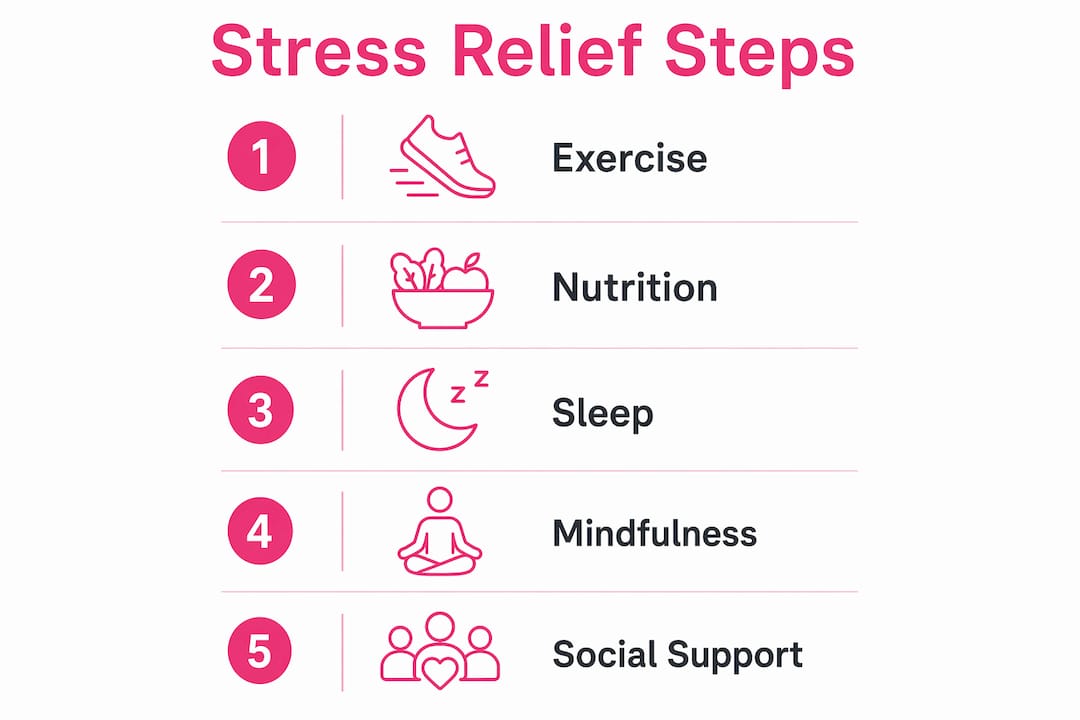
Physical activity sessions as short as 20 minutes, done several times a week, trigger mood-lifting endorphins and reduce mental fatigue. That means a 20-minute walk between study sessions is not wasted time. It is an investment in the quality of the next session.
Effective physical habits for student stress relief include:
-
Walking or cycling between campus buildings or during lunch breaks, which requires no gym membership and fits into any schedule.
-
Yoga or stretching routines of 15–20 minutes in the morning, which lower cortisol and improve body awareness.
-
Team sports or group fitness classes, which combine physical activity with social connection, addressing two stress factors at once.
-
Resistance training two to three times per week, which research consistently links to improved mood and reduced anxiety.
Nutrition plays an equally important role. Skipping meals or relying on caffeine and energy drinks to push through late-night study sessions spikes cortisol and crashes energy levels. A balanced diet with regular meal times keeps blood sugar stable, which directly supports concentration and emotional regulation.
Sleep is the third pillar. Sleep deprivation worsens stress and reduces emotion regulation, making every academic challenge feel harder than it is. Aim for 7–9 hours per night, keep a consistent sleep and wake time even on weekends, and avoid screens for at least 30 minutes before bed.
| Habit | Recommended amount | Primary benefit |
|---|---|---|
| Aerobic exercise | 20+ minutes, 3x per week | Reduces cortisol, boosts endorphins |
| Sleep | 7–9 hours nightly | Restores emotion regulation and memory |
| Balanced meals | 3 meals plus snacks daily | Stabilizes energy and concentration |
| Caffeine intake | Moderate, avoid after 2:00 PM | Prevents sleep disruption and anxiety spikes |
Pro Tip: Pair your exercise habit with your study schedule. A 20-minute walk immediately after a study block doubles as both a physical reset and a natural Pomodoro break.
How can mindfulness and relaxation techniques help students manage stress?
Mindfulness is the practice of directing attention to the present moment without judgment. For students, it is one of the most accessible and evidence-backed student stress relief methods available, requiring no equipment and minimal time.
Deep breathing and meditation lower cortisol levels and calm the physical stress response when practiced consistently. The word “consistently” is doing real work in that sentence. Using these techniques only during a crisis is like trying to learn to swim during a flood. Regular practice builds the neural pathways that make the response automatic when you need it most.
Practical mindfulness tools for students:
-
Box breathing: Inhale for 4 counts, hold for 4, exhale for 4, hold for 4. Repeat four times. This technique directly activates the parasympathetic nervous system and can lower acute stress in under two minutes.
-
Body scan meditation: Spend 5–10 minutes mentally moving through each part of your body, noticing tension without trying to fix it. This builds awareness of where you hold stress physically.
-
Guided meditation sessions: Apps like Calm or Headspace offer 5–10 minute sessions designed for focus and pre-exam calm. Starting with guided audio removes the guesswork for beginners.
-
Mindful study transitions: Take three slow, deliberate breaths before starting a new subject. This simple ritual signals a mental shift and reduces the cognitive residue from the previous task.
The best time to practice is not when you feel stressed. Build a 5-minute breathing or meditation session into your morning routine or your pre-study ritual. That consistency is what makes micro-habits build long-term resilience rather than just providing temporary relief.
Pro Tip: Set a recurring phone reminder labeled “2-minute reset” at your most stressful time of day. When it fires, do four rounds of box breathing before returning to work. This trains your nervous system to recover faster over time.
How does building social support and study groups reduce student stress?
Stress compounds in isolation. When you face academic pressure alone, the brain interprets the absence of support as an additional threat. Social connection directly counters this response.
Students who build social support through study groups or by talking to trusted individuals report less stress and stronger academic motivation. Small groups of two to three people work best for accountability without the coordination overhead of larger groups. That size is small enough to stay focused and large enough to share the cognitive load of difficult material.
Effective ways to build academic social support:
-
Form a study group early in the semester, before pressure peaks. Waiting until exam week means building relationships under stress, which is harder for everyone.
-
Assign rotating roles in each session, such as who leads the review, who asks questions, and who summarizes. Structure prevents sessions from becoming unfocused social time.
-
Talk to a tutor or academic advisor when a subject feels unmanageable. Early practical support prevents stress from escalating into a crisis.
-
Use campus counseling services proactively, not just reactively. Many students wait until they are in acute distress. Scheduling a check-in session during a calm period builds a relationship before you need it urgently.
The social dimension of life design and goal-setting is often underestimated in academic contexts. Knowing that others share your goals and challenges reduces the shame that often accompanies academic struggle, and shame is one of the biggest barriers to seeking help early.
What are effective strategies for managing burnout during intense study periods?
Burnout is not the result of working hard. It is the result of working without recovery. The distinction matters because the solution is not to work less. It is to rest deliberately.
Micro-breaks of 10–15 minutes reset focus by stepping away from the study environment entirely. Scrolling social media at your desk does not count as a break. The brain needs a genuine change of context to recover.
-
Step outside for 10 minutes between study blocks. Natural light and movement reset the nervous system faster than passive screen time.
-
Do something creative during longer breaks, such as sketching, playing an instrument, or cooking a meal. Creative tasks use different cognitive networks and provide genuine mental rest.
-
Schedule rest in your calendar with the same weight as study sessions. Planned rest periods prevent burnout and improve sustained mental effort across long study periods.
-
Separate your study and relaxation spaces. Physical separation between study and rest areas helps the brain switch modes. If you study at your desk, do not watch TV or scroll there. If you relax on your bed, do not bring your laptop there.
-
Recognize early burnout signs before they become acute: persistent fatigue that sleep does not fix, emotional detachment from subjects you normally care about, and a drop in the quality of work despite increased hours.
Taking breaks is not giving up. It is a necessary action that sustains productivity during exam periods. Students who treat rest as a reward for finishing work consistently underperform compared to those who schedule it as part of the work itself. Building science-backed micro-habits into your daily routine is the most reliable way to protect your energy across a full semester.
Pro Tip: At the start of each week, block your rest periods in your calendar before you schedule your study sessions. This forces you to treat recovery as a fixed commitment rather than something that happens only if time allows.
Key Takeaways
The most effective approach to student stress management combines time structure, physical habits, mindfulness practice, social support, and deliberate rest into a consistent daily routine rather than a crisis response.
| Point | Details |
|---|---|
| Structure your time | Use the Pomodoro Technique with 25-minute work cycles and adapt intervals to your own focus patterns. |
| Move your body | Physical activity sessions of 20+ minutes several times a week reduce cortisol and boost mood. |
| Practice mindfulness daily | Box breathing and meditation lower cortisol most effectively when practiced consistently, not just during crises. |
| Build social support early | Study groups of two to three people reduce isolation and improve accountability before pressure peaks. |
| Schedule rest as work | Planned breaks and physical separation between study and relaxation spaces prevent burnout and sustain performance. |
What I’ve learned about stress that most student guides get wrong
Most advice on academic stress treats it as a problem to eliminate. That framing is the first mistake. Stress is a signal, not a flaw. The goal is not to feel nothing before an exam. It is to keep the signal at a level where it sharpens your focus rather than shutting it down.
What I have seen repeatedly is that students reach for coping strategies only when they are already overwhelmed. By that point, the strategies feel like they are not working, which is frustrating and discouraging. The truth is that small, consistent behavioral changes build better long-term results than infrequent intensive efforts. A 5-minute breathing practice every morning for a month does more than an hour of meditation the night before an exam.
The other misconception I want to address directly is that asking for help signals weakness. Seeking support from a tutor, counselor, or study group is one of the highest-leverage moves a student can make. The students who perform best under pressure are almost never the ones who suffer in silence. They are the ones who built their support systems before they needed them urgently.
My honest advice: pick one technique from each category in this article, practice it for two weeks, and then add another. Do not try to overhaul your entire routine at once. Stress management is a skill, and skills are built through repetition, not resolution.
— Jessica
Perks Media resources for student well-being
Academic stress does not exist in isolation from the rest of your health. What you eat, how you move, and how you structure your goals all feed directly into how well you manage pressure.
Perks offers a growing library of science-backed books and guides covering physical fitness, nutrition, and life design, all built around the same principle that small, consistent habits produce lasting results. Whether you are looking to build a better meal routine to support your energy levels or find structured guidance on habit formation, the Perks wellness library gives you practical, research-informed resources designed to fit into a real student schedule. Explore the full range and find the tools that match where you are right now.
FAQ
What are the most effective stress management techniques for students?
The most effective methods combine time management tools like the Pomodoro Technique, regular physical activity, daily mindfulness practice, and social support through study groups. Consistency across all four areas produces better results than relying on any single technique.
How does exercise help with academic stress?
Physical activity sessions of as little as 20 minutes several times a week trigger endorphins that reduce mental fatigue and improve mood. Exercise also lowers cortisol, the primary stress hormone, making it one of the fastest-acting student stress relief methods available.
How much sleep do students need to manage stress effectively?
Students need 7–9 hours of sleep per night. Sleep deprivation worsens stress responses and reduces the brain’s ability to regulate emotions, making academic challenges feel significantly harder than they are.
What is box breathing and how does it reduce stress?
Box breathing involves inhaling for 4 counts, holding for 4, exhaling for 4, and holding for 4. This pattern activates the parasympathetic nervous system and lowers cortisol, providing measurable calm in under two minutes.
When should a student seek professional help for stress?
Seek professional support when stress persists despite using coping strategies, when it disrupts sleep or appetite consistently, or when it causes emotional detachment from daily life. Campus counseling services are most effective when contacted early, before stress escalates into a crisis.